
- All the latest news, data, and market intelligence across MENA at your fingerprints
- First-hand updates and inside information on projects, clients and competitors that matter to you
- 20 years' archive of information, data, and news for you to access at your convenience
- Strategize to succeed and minimise risks with timely analysis of current and future market trends
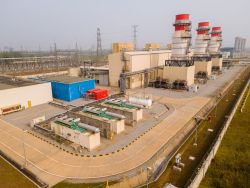
UAE firm acquires majority stake in African power producer
Abu Dhabi-based ePointZero has announced a deal to acquire a 90% stake in pan-African independent power producer Azura Power Holdings. The transaction will give the subsidiary of UAE investment group 2PointZero…read more
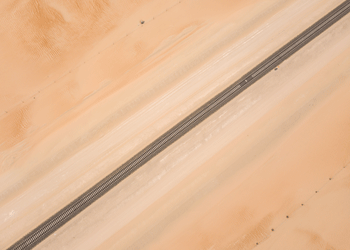
Contract award nears for Saudi Landbridge Riyadh section
Saudi Arabia Railways (SAR) is preparing to award the main construction contract for the design-and-build of the Riyadh Rail Link, a new north-to-south railway line across the capital. MEED understands…read more
Latest News
-
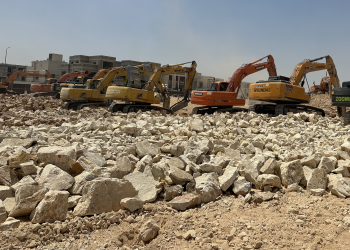 Prequalification begins for Dammam suburb boulevard PPP
31 August 2026
Saudi Arabia’s Ministry of Municipalities & Housing, in collaboration with Ashraq Development Company and the National Centre for Privatisation & PPP, has issued a request for qualification (RFQ) notice for the development of the King Fahd suburb boulevard project in Dammam.
The notice was issued on 27 August, with a submission deadline of 22 October.
The public-private partnership (PPP) project will be delivered using a design, build, finance, operate, maintain and transfer model, with a 43-year contract term.
The project is located in Al-Bayda Governorate and features a 4 kilometre (km) mixed-use zone along a central boulevard, forming part of a larger 7.3km corridor.
The project will be developed in two phases and span about 1 million square metres.
According to a statement: “The private sector partner will be responsible for developing and operating the boulevard, which includes leisure and recreational facilities, public parks, entertainment venues, retail outlets, office spaces, hospitality zones, pedestrian walkways and road networks.”
The project is the latest addition to the growing number of PPP projects in the kingdom.
In January, Saudi Arabia launched a national privatisation strategy aimed at mobilising $64bn in private sector capital by 2030.
Building on the privatisation programme first introduced in 2018, the strategy focuses on unlocking state-owned assets for private investment and privatising selected government services.
In a statement, NCP said the strategy comprises 147 opportunities drawn from a broader pipeline of more than 500 projects across 18 sectors.
https://image.digitalinsightresearch.in/uploads/NewsArticle/19160560/main.jpg -
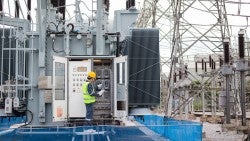 Contractors submit bids for Kuwait power transmission works
31 August 2026

Kuwait’s Public Authority for Housing Welfare (PAHW) has received bids for two tenders covering power transmission works at the South Saad Al-Abdullah residential development.
The first tender covers the supply, installation and maintenance of 10 main 132/11kV transformer substations for the third phase of the development.
According to sources, five contractors submitted bids on 26 August. The local Sayed Hamid Behbehani & Sons made the lowest offer of $104.2m.
The bids include:
- Sayed Hamid Behbehani & Sons: $104.2m (Kuwait)
- Industrial Electrical Projects (IEP): $111.5m (Kuwait)
- Larsen & Toubro: $114m (India)
- Oman National Engineering & Investment: $118m (Oman)
- National Contracting Company: $126m (Saudi Arabia)
The second PAHW tender covers the supply, installation and maintenance of 10 main 132/11kV transformer substations for the fourth phase of the project.
According to sources, five contractors also submitted bids on 26 August, with A-Ahleia Switchgear making the lowest offer of $103.3m.
The bids include:
- Al-Ahleia Switchgear: $103.3m (Kuwait)
- Industrial Electrical Projects (IEP): $111.7m (Kuwait)
- Larsen & Toubro: $114m (India)
- Oman National Engineering & Investment: $118.3m (Oman)
- National Contracting Company: $126m (Saudi Arabia)
Both projects were initially tendered in May. As reported by MEED, PAHW previously issued addendums for both substation tenders, revising the qualification requirements for bidders.
According to the revised requirements, contractors must be approved by Kuwait’s Ministry of Electricity, Water & Renewable Energy and have experience supplying and installing at least 10 132kV substations in Kuwait.
The addendums also introduced requirements related to transformer and gas-insulated switchgear manufacturing approvals, as well as operational performance records for installed equipment.
Sabah Al-Ahmad residential city
Meanwhile, bids remain under evaluation for two 132kV underground cable tenders for the South Sabah Al-Ahmad residential development, tendered by PAHW in May.
The first cable tender covers the supply, extension and maintenance of 132kV underground cables feeding eight main transformer substations serving the N1, N6 and N11 districts in the project’s fourth phase.
MEED previously reported that Egytech Cables, a subsidiary of Egypt’s Elsewedy Electric, was the lowest bidder with an offer of $42.37m.
The second cable tender covers the supply, extension and maintenance of 132kV underground cables linked to substations serving the N5, N6, N8 and N10 districts in the project’s third phase.
Egytech Cables submitted the lowest offer of $39.95m. TBEA Shandong Luneng Taishan Cable submitted a bid of $41.89m, along with Riyadh Cables ($42.05m) and The Contractor General Trading & Contracting ($44.97m).
https://image.digitalinsightresearch.in/uploads/NewsArticle/19151780/main.jpg -
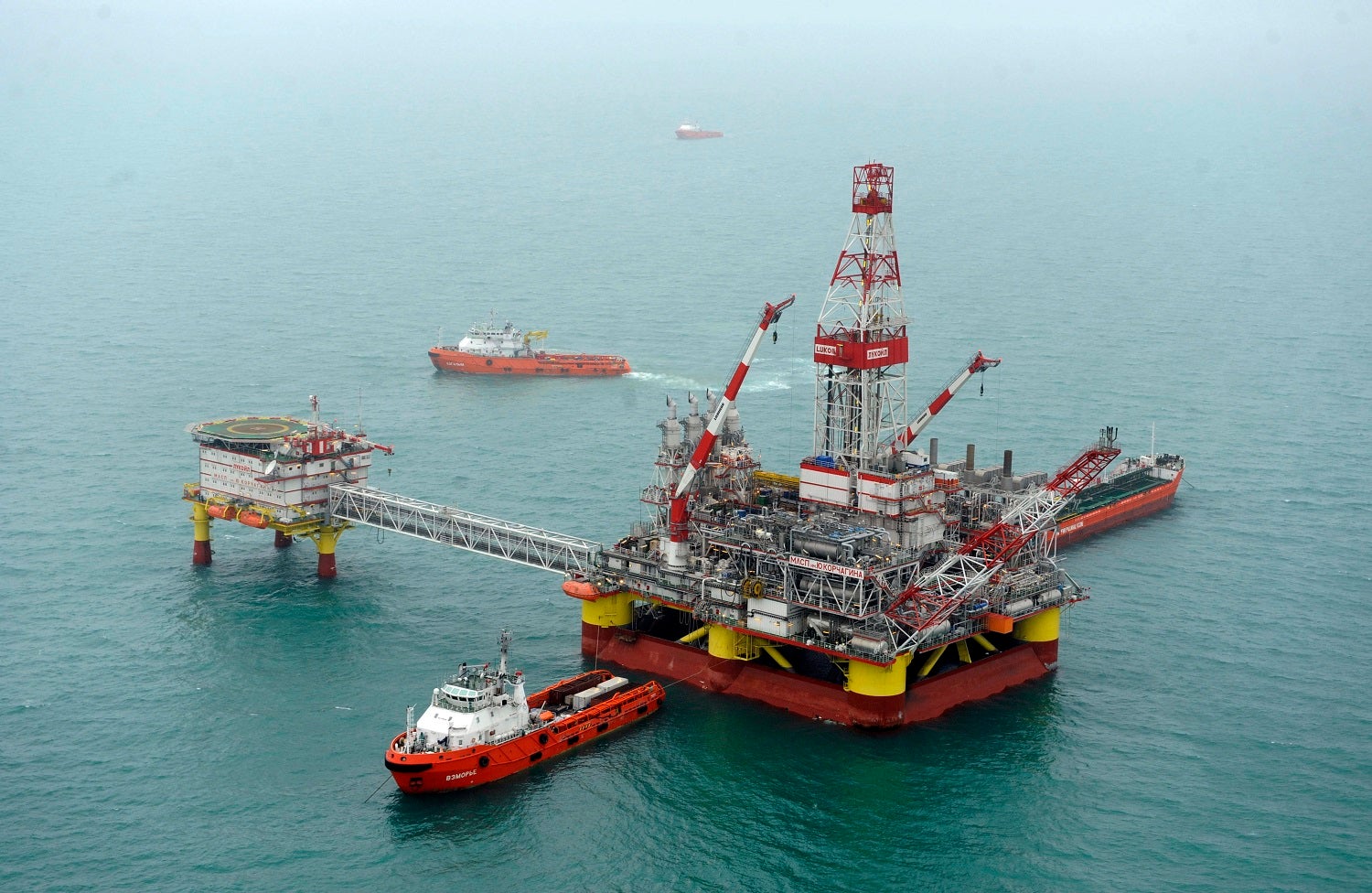 Eni plans to drill 230 oil and gas wells in Egypt
31 August 2026
Italy’s Eni is planning to drill 230 new oil and gas wells in Egypt, according to a statement from the country’s Ministry of Petroleum & Mineral Resources.
Eni’s chief executive, Claudio Descalzi, discussed his plans for exploration and development in Egypt on 25 August during a meeting with Egypt’s Prime Minister Mostafa Madbouly and the Minister of Petroleum and Mineral Resources Karim Badawi.
During the meeting, Descalzi said that the company has plans to drill 30 exploration wells in addition to 200 development wells.
Descalzi said his company plans to intensify its exploration and development programmes, especially in the Mediterranean and Western Sahara regions, to increase production of natural gas and crude oil.
He said that his company plans to use the latest seismic imaging and artificial intelligence technologies as a key part of its exploration and development plans.
In a separate statement, Eni also said that it is working with UK-headquartered BP and state-owned Egyptian General Petroleum Corporation (EGPC) to reach a final investment decision (FID) for a project to develop the major gas discovery of Denise West in Egypt’s Temsah concession.
Eni made the discovery in February and says it holds about 2 trillion cubic feet of gas and 130,000 barrels of condensate.
It is targeting first gas in less than two years and expects to reach FID “in the next few months”, according to its statement.
Eni’s total investments in Egypt have reached a value of $8.5bn, according to the statement from Egypt’s Ministry of Petroleum & Mineral Resources.
During the meeting on 25 August, Descalzi also stressed the importance of linking Cyprus’ Cronos gas field to Egyptian export infrastructure.
In July, Eni reached the FID to develop the Cronos project in deep waters offshore Cyprus, targeting the first Cypriot gas to market in 2028.
Production is expected to reach a plateau of 500 million standard cubic feet a day.
In October last year, Egypt and Cyprus signed provisional agreements to connect Cyprus’ Cronos gas field to Egypt’s gas infrastructure.
The agreements were signed by parties including Egypt’s Ministry of Petroleum and Mineral Resources, Eni, and the French oil and gas company TotalEnergies.
Connecting the Cronos field to Egypt is expected to involve the tendering of a major subsea pipeline project.
This will allow gas to be transported and processed in existing Zohr facilities in Egypt, then transferred and liquefied at the Damietta LNG plant for export as LNG to international markets, primarily Europe.
At the meeting on 25 August, Descalzi said the planned project to connect the Cronos field to Egypt will be considered a model for regional cooperation in the gas sector and will enhance Egypt’s status as a regional gas hub.
https://image.digitalinsightresearch.in/uploads/NewsArticle/19079059/main.jpg -
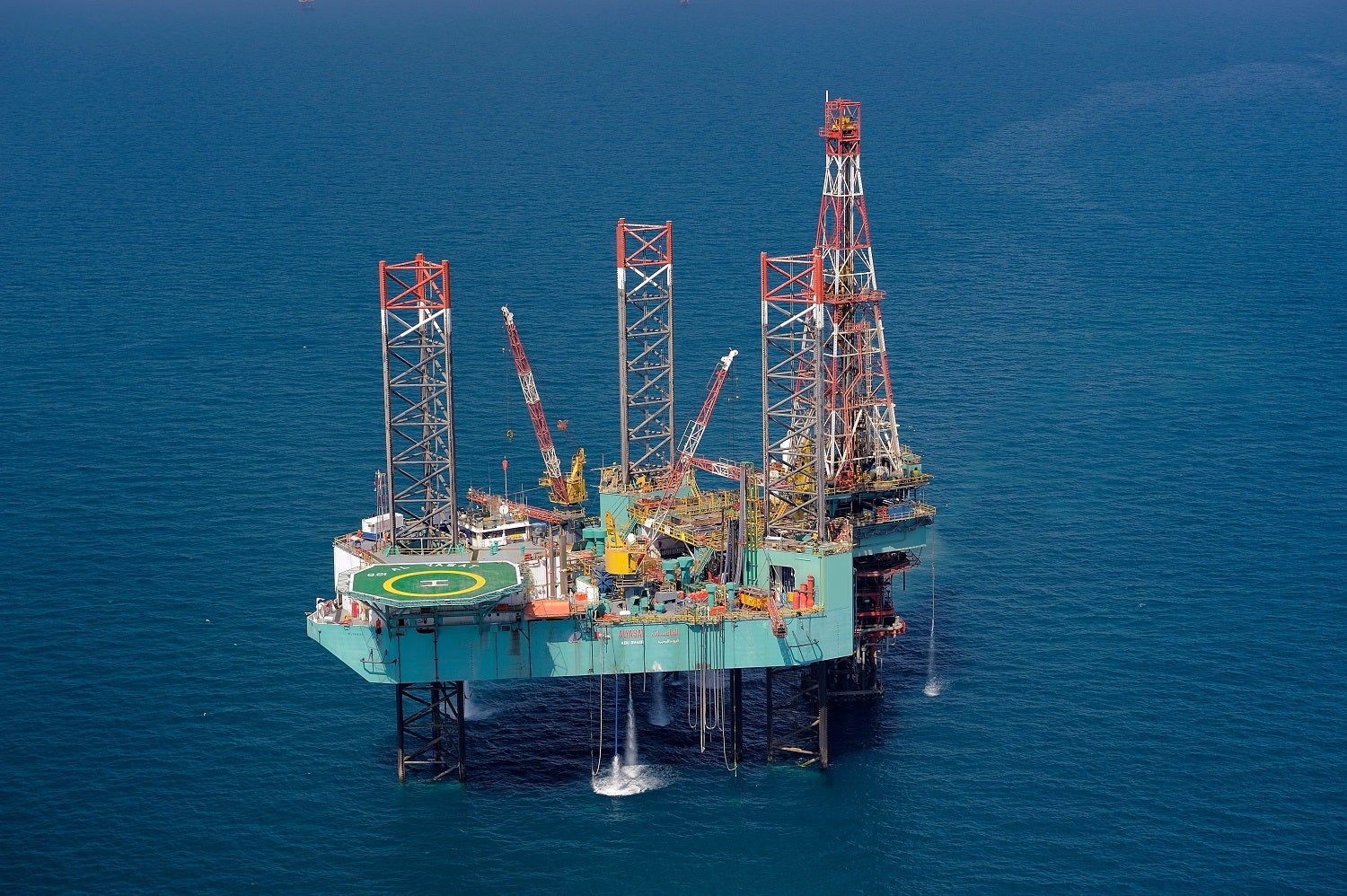 Shell approves Egypt offshore gas project
31 August 2026
BG Delta, a Shell subsidiary, has reached the final investment decision for phase 12a of the West Delta Deep Marine (WDDM) development project.
The project will be implemented in partnership with Malaysia’s Petronas and state-owned Egyptian General Petroleum Corporation (EGPC).
Shell, Petronas and EGPC formed a joint venture called Burullus Gas Company to operate the WDDM concession.
Phase 12a includes drilling and completing three deepwater gas wells, with production expected to begin in 2028, according to a statement from the London-headquartered company.
The wells will be tied into existing subsea infrastructure, helping accelerate development, improve capital efficiency and limit the need for additional facilities.
Dalia El-Gabry, the vice-president and chairperson of Shell Egypt, said: “This investment demonstrates our commitment to maximising the remaining potential in WDDM where the right technical and commercial conditions exist.
“By leveraging existing infrastructure and our proven development experience, we can accelerate delivery while reinforcing our partnership with the Egyptian government and joint venture partners to help meet Egypt’s energy needs.”
The new development builds on phases 10 and 11, which brought six wells online during 2024 and 2025.
Its scope also covers facility installation, tie-in operations, commissioning and connection to existing offshore infrastructure.
Egypt’s Ministry of Petroleum & Mineral Resources said in May that about $350m had been allocated to phase 12a.
In April, Egypt’s Petroleum Marine Services (PMS) was awarded a contract for offshore works for phase 12 of the WDDM field development project.
The contract awarded to PMS uses the engineering, procurement, installation and construction contract model.
Under the scope of the contract, PMS will install the required electrical, hydraulic and mechanical connections in deep waters to tie three new gas wells into production as part of phase 12.
The scope also includes the installation of three final triple tie-in spool bases to complete the connection between the wells.
During phases 10 and 11 of the WDDM project, PMS laid two offshore electrical cables at water depths reaching 660 metres, in addition to carrying out well tie-in and production connection works at depths of up to 880 metres.
https://image.digitalinsightresearch.in/uploads/NewsArticle/19078753/main.jpg -
 Contractors appointed for Group 1 battery storage projects
27 August 2026
Register for MEED’s 14-day trial access
Two contractors have been appointed for engineering, procurement and construction (EPC) works on Saudi Arabia’s four Group 1 battery energy storage system (bess) projects with a combined capacity of 2,000MW, a source has confirmed to MEED.
Saudi Arabia’s principal buyer, Saudi Power Procurement Company (SPPC), recently signed four storage service agreements for the bess projects, which will provide four hours of storage, equivalent to 8,000 megawatt-hours (MWh), and involve a total investment of more than SR4.35bn ($1.16bn).
Three projects were awarded to a consortium comprising Saudi Energy, Acwa and Al-Sharif Contracting & Commercial Development Company.
According to the source, India’s Larsen & Toubro will carry out EPC works for these three projects, comprising the Al-Muwyah and Haden bess independent storage providers (ISPs) in the Mecca region, and the Al-Kahafa bess ISP in the Hail region.
Each has a capacity of 500MW for four hours. The three projects have a combined capacity of 1,500MW and 6,000MWh.
L&T recently announced that it had secured “a major order” for bess projects in the Middle East but did not disclose the specific projects involved.
The fourth project, the Al-Khushaybi bess ISP in the Qassim region, was awarded to a consortium of France’s Engie and local firm Haji Abdullah Alireza & Co. This also has a capacity of 500MW for four hours.
China’s Sepco 3 has been appointed as the EPC contractor for this project, a source said.
The agreements cover the first group of ISP bess projects being procured by SPPC under a build, own and operate model. The projects are supervised by the Energy Ministry.
The projects form part of Saudi Arabia’s efforts to achieve an electricity generation mix comprising approximately 50% renewable energy by 2030.
As previously reported, the Group 2 programme comprises six ISP projects with a total capacity of 3GW, equivalent to 12,000MWh based on a four-hour storage duration.
Developers recently submitted a first round of clarification requests to SPPC as they prepare their bids in advance of an October deadline.
https://image.digitalinsightresearch.in/uploads/NewsArticle/19052381/main.jpg -
 Accor and Al-Qimmah plan 4,000 Saudi rooms
27 August 2026
France’s hotel operator Accor has expanded its partnership with local firm Al-Qimmah Hospitality, a subsidiary of Saudi Arabia’s BinDawood Investment Company, to develop more than 4,000 hotel rooms in the kingdom.
The plan focuses on building a portfolio in Mecca and Medina.
The expanded agreement was announced in Paris during the French-Saudi Investment Roundtable. It follows a master development agreement signed in 2025. The partnership now covers five hotels in Jeddah, Mecca and Medina across the premium, midscale and economy segments.
One planned development is an 850-room Novotel in Mecca, due to open in 2030. The agreement also covers the Mercure Makkah Shesha, ibis Styles Makkah Mesfalah, Movenpick Madinah and Swissotel Jeddah properties.
The partnership will also support job creation and Saudi workforce development through Tamayyaz by Accor, the group’s national talent programme run with the Saudi Ministry of Tourism. The programme aims to develop and hire more than 3,000 Saudi nationals by 2030.
Accor has operated in Saudi Arabia for more than three decades and runs 48 hotels with more than 21,600 rooms nationwide. Its pipeline includes a further 47 properties comprising more than 11,400 rooms.
https://image.digitalinsightresearch.in/uploads/NewsArticle/19051854/main.jpg -
 Jeddah tenders stormwater drainage contracts
27 August 2026
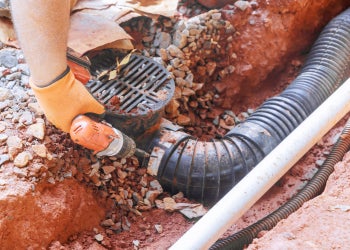
Jeddah Municipality has invited contractors to bid for a contract covering the construction of a rainwater drainage network for the Prince Fawaz neighbourhood.
The project aims to collect and convey rainwater away from residential streets and low-lying areas. It is valued at $60m and intended to reduce flooding risks during heavy rainfall.
The scope includes manholes, stormwater catch basins and connections to existing manholes as well as the restoration of road surfaces.
The bid submission deadline is 12 October.
The municipality is also progressing with a second stormwater drainage project for the first package of Zone (BC), Old Zahraa in Jeddah Governorate, with bids due on 2 September. The project is valued at about $30m.
The two projects are part of the municipality’s wider drainage programme, which includes the flagship King Abdullah Road-Falasteen Road tunnel project.
MEED previously reported that Saudi contractor Thrustboring Construction Company had been selected for phases one and two of the project, each valued at about $175m, covering the construction of large-diameter stormwater drainage tunnels.
It is understood that an official agreement has yet to be signed.
In June, MEED reported that local contractor Alkhorayef Water & Power Technologies (AWPT) had signed two contracts with Jeddah Municipality to operate and maintain stormwater and surface water drainage networks across the city.
The contracts have a combined value of SR202.06m ($53.9m), and each will run for five years.
The first contract, valued at SR108.46m ($28.9m), covers the operation and cleaning of stormwater and surface water networks in the South and Al-Malisa sub-municipalities.
The second contract, worth SR93.59m ($25m), covers similar services for the Airport Sub-Municipality.
https://image.digitalinsightresearch.in/uploads/NewsArticle/19039514/main.jpg -
 OQ seeks revised prices for NGL project from preferred contractors
26 August 2026
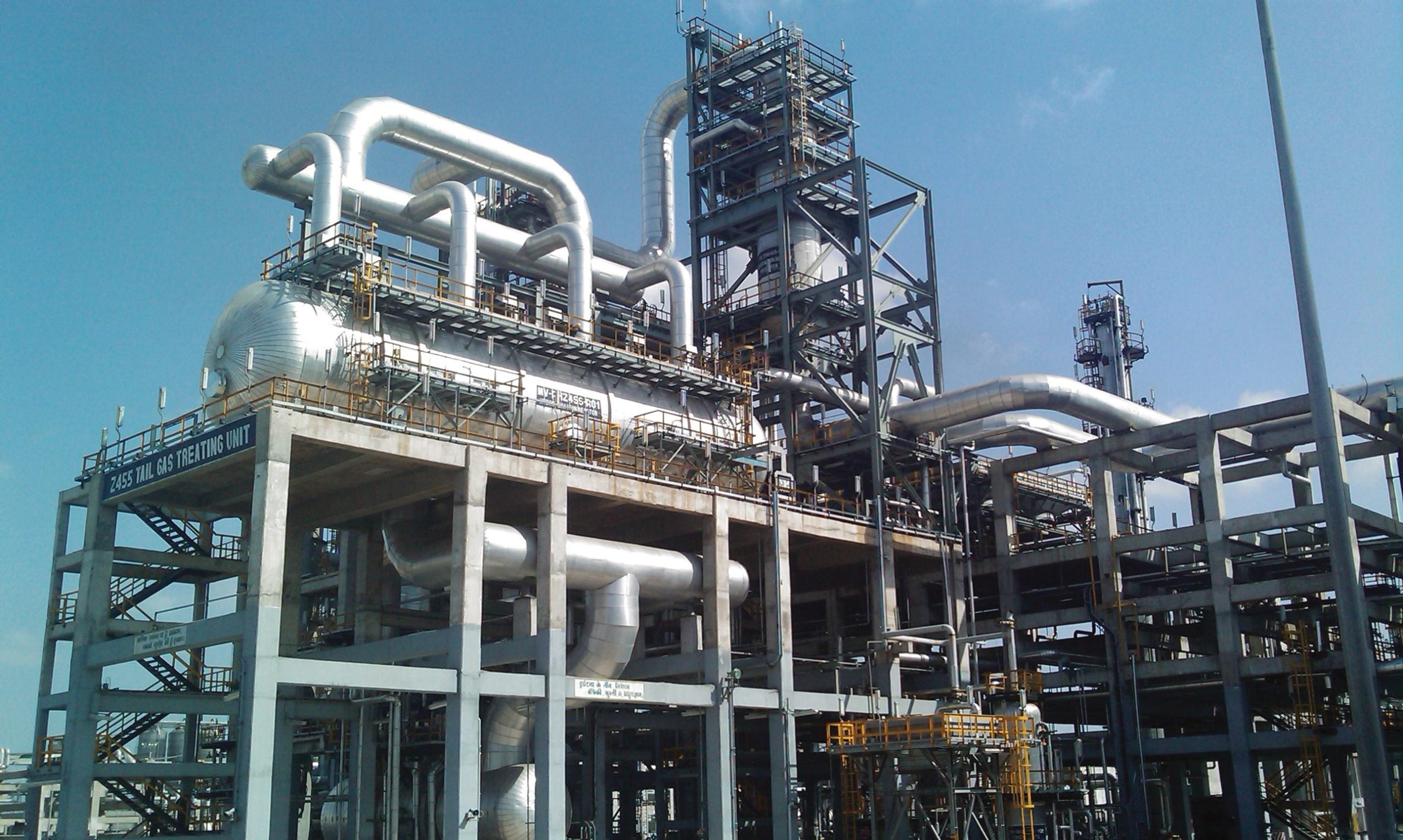
Omani state energy conglomerate OQ Group has sought revised commercial proposals from a set of preferred bidders for its planned project to build a major natural gas liquids (NGL) facility in the sultanate.
The planned NGL facility at Saih Nihayda in central Oman will extract condensates and transport them to Duqm on the sultanate’s Arabian Sea coast for fractionation and export, OQ Group said.
OQ Group intends to deliver the project using a front-end engineering and design (feed)-to-engineering, procurement and construction (EPC) competition model. Under this model, the project operator selects contractors to carry out the feed work. The operator then awards the EPC contract to the contractor with the most competitive feed proposal, while compensating the other participants for their work.
MEED reported in June that OQ Group was seeking revised prices from contractors it had selected earlier this year to participate in the feed-to-EPC competition. Contractors submitted their revised bids by 6 July.
According to sources, OQ Group entered into negotiations with bidders in the weeks after receiving the revised commercial bids. The client is then said to have approached only the following three contractors for their final commercial offers on the NGL project:
- Saipem (Italy)
- Tecnicas Reunidas (Spain)
- Tecnimont (Italy)
MEED previously reported that the contractors who had submitted their original proposals to OQ for the feed-to-EPC competition on 20 May were:
- Hyundai Engineering & Construction (South Korea) / KBR (US)
- JGC Corporation (Japan)
- Petrofac (UK)
- Saipem (Italy)
- Technip Energies (France)
- Tecnicas Reunidas (Spain)
- Tecnimont (Italy)
OQ issued the main tender for the feed-to-EPC competition in March, setting an initial deadline of 8 April for contractors to submit proposals, which it later extended to 6 May and then again to 20 May.
MEED previously reported that the state enterprise had started the prequalification process for the feed-to-EPC contest for the planned NGL project in November last year, with contractors submitting responses by 15 December.
In addition to the contractors understood to have submitted proposals for the feed-to-EPC competition, OQ also invited the following firms to participate, although they are understood to have pulled out of the contest later:
- Chiyoda (Japan) / CTCI (Taiwan)
- GS Engineering & Construction (South Korea)
- Kent (UAE)
- Samsung E&A (South Korea) / Larsen & Toubro Energy Hydrocarbon (India) / Wood (UAE).
Project scope of work
The scope of work on the project covers the development, verification and integration of feed deliverables for the following facilities and systems:
NGL extraction facility – Saih Nihayda:
- Verification and updating of the existing feed to enable dual-mode operation (ethane recovery and ethane rejection)
- Identification and implementation of required process, equipment, utilities and control system modifications
NGL pipeline – Saih Nihayda to Duqm:
- Feed for a new NGL transmission pipeline stretching approximately 230 kilometres, including routing, hydraulics, stations, pigging facilities, metering, corrosion protection, leak detection and safety systems
Fractionation unit at Duqm:
- Feed for a new fractionation facility to process ethane and propane plus NGL and recover propane, butane, condensate, and the provision for future ethane recovery
- Design accommodating licensed or open-art technology and future tie-in to a planned petrochemicals project in Duqm
Product pipelines, storage and export facilities at Duqm jetty:
- Feed for product pipelines, cryogenic and atmospheric storage tanks, vapour recovery systems, marine loading arms and export facilities
- Integration with existing port and refinery infrastructure, where feasible
Supporting systems and studies:
- Utilities, offsites, flare systems, safety and environmental studies, cost estimates (class 2+10%), project schedules, constructability assessments and EPC tender documentation
Gulf NGL projects
Gulf national oil companies have been allocating significant capital expenditure to the construction or expansion of NGL production facilities.
In September last year, QatarEnergy awarded the main EPC contract for its project to add a fifth NGL train at its fractionation complex in Qatar’s Mesaieed Industrial City. The aim of the project, which is estimated to be worth $2.5bn, is to build a fifth NGL train (NGL-5) with the capacity to process up to 350 million cubic feet a day of rich associated gas from QatarEnergy’s offshore and onshore oil fields.
The main EPC contract for the QatarEnergy NGL-5 project was won by a consortium of India’s Larsen & Toubro Energy Hydrocarbons Onshore and Greece-headquartered Consolidated Contractors Group.
Separately, MEED reported in March that the gas processing business of Abu Dhabi National Oil Company (Adnoc Gas) had selected the main contractor for a project to install a fifth NGL fractionation train at its Ruwais gas processing facility in Abu Dhabi.
The fifth NGL fractionation train will have an output capacity of 22,000 tonnes a day, or about 8 million tonnes a year. The Ruwais NGL Train 5 project represents the second phase of Adnoc Gas’ Rich Gas Development programme, and its budget is estimated to be about $4bn, Peter Van Driel, Adnoc Gas’ chief financial officer, confirmed in February.
ALSO READ: PDO floats tender for major flare gas monetisation scheme
https://image.digitalinsightresearch.in/uploads/NewsArticle/19011913/main.jpg
Top Trending Articles
- Neom hydrogen project reaches 60% completion rate
- Masdar completes Terna Energy acquisition
- Top pending projects in 2024
- Abu Dhabi to tender Project Wave phase two in 2024
- Samsung C&T to undertake Amiral cogen EPC
- Top 10 GCC contractors by country
- Gigaproject seeks firms for Riyadh rail link
- Joint venture selected for Oxagon port work
Exclusive from Meed
-
UAE firm acquires majority stake in African power producer
31 August 2026
-
Contract award nears for Saudi Landbridge Riyadh section
31 August 2026
-
Prequalification begins for Dammam suburb boulevard PPP
31 August 2026
-
Contractors submit bids for Kuwait power transmission works
31 August 2026
-
Eni plans to drill 230 oil and gas wells in Egypt
31 August 2026
All of this is only 1% of what MEED.com has to offer
Subscribe now and unlock all the 153,671 articles on MEED.com

-
Digital Subscription
$175/monthPaid Annually
-
MEED.com
Unlimited access to 20 year archive on desktop and mobile
-
Video Content
All the latest news and analysis in a convenient video format
-
Daily/Weekly Newsletters
Receive your choice of sector and country newsletters at your preferred frequency
-
MEED.com
-
Premium Subscription
$291/monthPaid Annually
-
MEED.com
Unlimited access to 20 year archive on desktop and mobile
-
Video Content
All the latest news and analysis in a convenient video format
-
Daily/Weekly Newsletters
Receive your choice of sector and country newsletters at your preferred frequency
-
MEED Premium Datasets
Access five interactive datasets and conduct your own research into market trends, deals and companies
-
MEED Bussiness Review Magazine
Get our unique, forward looking commentary and analysis delivered to your desktop
-
Regular Subscriber Briefings
Network with industry leaders and fellow colleagues in an informal setting
-
Account Manager/Training
A dedicated account manager for all your requests and enquiries to make the most the platform
-
MEED.com